2026 NC Industrial Stormwater Permit Renewal Guide
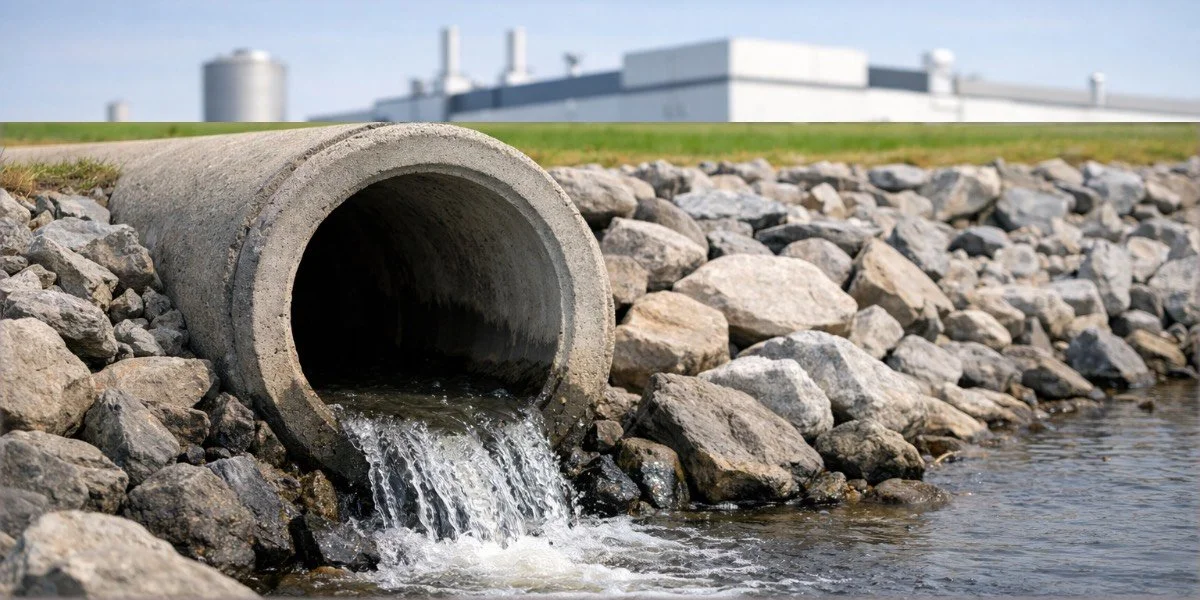
Industrial facilities across North Carolina tend to treat permit renewal like a paperwork date on a calendar. Then June shows up, somebody realizes the facility contact is outdated, the billing contact left the company eight months ago, the legally responsible person changed after a sale, and the SWPPP still references a loading area that no longer exists. That is how a normal administrative deadline turns into a scramble.
For facilities covered under NCG06, NCG08, and NCG10, the 2026 renewal cycle matters because those general permits are set to expire on June 30, 2026. The state has already made the big picture clear. Certificates of Coverage that are current on fees will be renewed automatically, but permittees still need to verify the information DEQ has on file, review the draft permit when posted, confirm eDMR readiness, and renew Representative Outfall Status documentation if applicable.
That is the real July 1 permit cliff.
It is not dramatic because renewal is impossible. It is dramatic because a lot of facilities assume renewal is passive when, in practice, compliance is only smooth if your information, reporting access, and site documentation are already in order.
For industrial property owners, facility managers, environmental health and safety teams, and operations leaders, this is the season to clean up the admin side before it becomes an operational problem. And for multi-site owners who also oversee commercial properties, HOA common-area assets, or golf course stormwater infrastructure, the lesson is familiar: water systems do not get easier when ignored. They get more expensive.
At Clearwater Lake, Pond and Stormwater Management Services, we see this pattern all the time across the Charlotte Metro, Lake Norman, Catawba Valley, and Piedmont Triad regions. A pond, outfall, swale, or stormwater control measure may look fine from the parking lot while the paperwork, inspection history, and maintenance record tell a very different story. That is why a permit readiness check before renewal is often the smarter move than waiting until July and hoping the file in Raleigh matches reality on site.
What permits are affected by the 2026 renewal cycle?
According to NC DEQ, these general permits are among those scheduled to expire on June 30, 2026:
NCG060000 for food and kindred industries and certain related activities
NCG080000 for transit and transportation activities
NCG100000 for used motor vehicle activities
If your facility operates under one of those permits, now is the time to confirm what DEQ has on file in the Stormwater Program Laserfiche Repository and the Stormwater Permit Summary Report. DEQ specifically tells permittees to check whether any permit information needs to be updated before renewal because Certificates of Coverage are only sent once, and ownership or facility-name changes can create avoidable problems if the state record is outdated.
That detail matters more than it sounds.
In the real world, facilities change hands. Accounting teams centralize. EHS managers leave. Plant supervisors inherit compliance binders that still reference people who have not worked there in years. A property may be improved, paved, reconfigured, or expanded while the paper record still reflects the previous version of the site.
The result is usually not one giant catastrophic mistake. It is a stack of small preventable misses.
Why the “automatic renewal” language can be misleading
A lot of operators hear “automatic renewal” and mentally move the task to the bottom drawer.
That is not what DEQ is telling permittees to do.
Yes, NC DEQ says Certificates of Coverage that are current with fees will be automatically renewed. But in the same guidance, DEQ also tells permittees to:
pay outstanding fees as soon as possible
verify permit data before renewal
review the draft general permit when posted for public comment in mid-April 2026
ensure they are registered for eDMR reporting
submit ROS Renewal Certification Form materials if they have Representative Outfall Status
That is a pretty clear message from the state: renewal may be automatic for eligible permittees, but readiness is not.
Think of it this way. Automatic renewal helps if your file is current. It does not fix stale contacts, incomplete eDMR setup, unsupported ROS status, or a SWPPP that no longer matches field conditions.
This is similar to what HOAs, golf course managers, and commercial property owners run into with stormwater assets. A detention pond may still exist, and the outlet structure may still technically function, but that does not mean the system is being maintained, documented, and defended the way it should be. The industrial version of that same problem usually shows up in permit records, sampling logistics, and site housekeeping.
The first step: check the state’s file before June
NC DEQ directs permittees to enter the stormwater permit number into the Stormwater Permit Summary Report to review facility address details, permit contacts, and regulated outfalls. If something is wrong, DEQ provides specific update paths for name or ownership changes, legally responsible person updates, signature authority, billing contact, permit contact, and facility contact changes.
This is where many facilities save themselves a headache.
Before the end of June, verify:
facility legal name
ownership information
facility address
billing contact
permit contact
facility contact
legally responsible person
delegated signatory information
listed stormwater discharge outfalls
This is not glamorous work, but it is the kind of work that prevents missed correspondence, delayed approvals, and compliance confusion later.
For facilities with multiple moving parts, this can also be the moment to compare the paper record against what is actually happening outside. Are all exposed industrial areas still where the SWPPP says they are? Did vehicle storage shift? Did material handling expand? Was a drainage path rerouted during site work? Did a new tenant change the exposure profile on a shared industrial parcel?
Those are not just field questions. They are renewal questions.
Do not ignore fees
NC DEQ’s general industrial permit page says permittees with outstanding fees should pay them as soon as possible, and it notes that the application fee and annual fee for coverage under a stormwater general permit are $127 for applications received on or after July 1, 2025.
That number is not enormous. The cost of sloppiness around it can be.
Many companies do not get into trouble because a fee is unaffordable. They get into trouble because the invoice was routed to the wrong place, a billing contact changed, or nobody realized a small admin item was sitting unresolved while the expiration date kept moving closer.
For owners managing industrial facilities alongside retail centers, office parks, apartment communities, or HOA portfolios, this is a familiar theme. The problem is rarely one giant budget item. The problem is scattered responsibility.
Review the draft permit, not just your current one
NC DEQ says facilities whose general permits will be renewed in 2026 should review the draft general permit that will be posted for public comment in mid-April 2026.
That step matters because a permit term rollover is not just a reprint of the old binder. Even when the framework is familiar, draft and renewed permits should be reviewed for monitoring language, benchmark requirements, reporting procedures, special conditions, housekeeping expectations, and implementation details.
DEQ’s technical guidance also makes an important point about benchmarks. Benchmarks are not numeric effluent limits, but if a permittee exceeds a benchmark and fails to investigate or take the required corrective actions, that becomes a compliance problem.
In plain English, the number itself is not the whole story. Your documented response matters.
That is exactly why a rushed July response is a weak strategy. Facilities do better when they review the permit term change in advance and align the site, records, and responsibilities before the first avoidable sampling or documentation issue appears.
eDMR access is not something to “get to later”
NC DEQ also instructs permittees to make sure they are registered for eDMR. The state’s Six Step Process page says all permittees should have completed the first two steps and notes that activation can take time because users may have to wait for an email confirming the account is active before completing later steps.
That means waiting until the last minute is an unnecessary gamble.
If your reporting chain depends on one person, and that person is no longer with the company, now is the time to fix it. If signatory authority is unclear, now is the time to fix it. If your environmental consultant used to handle the process and your internal team assumed access was already squared away, now is the time to verify.
Industrial compliance gets messy fast when digital access assumptions are wrong.
Representative Outfall Status needs attention too
If your facility has Representative Outfall Status, NC DEQ says you should submit the ROS Renewal Certification Form and the documentation originally provided when ROS was granted using the Stormwater Upload Form.
ROS is helpful because it can reduce the number of outfalls that need analytical monitoring when one discharge is representative of multiple substantially identical discharges. But ROS is not something to assume will simply roll forward on autopilot without support.
If the site has changed, if drainage patterns have changed, or if documentation is buried in an old folder nobody can find, the smart move is to sort that out before the renewal deadline gets close.
The SWPPP is where many facilities quietly fall behind
A lot of permit renewal stress is really SWPPP stress wearing a permit hat.
On paper, your permit may still look fine. On site, your actual exposure conditions may have drifted. Container storage changes. Secondary containment gets compromised. Vehicle maintenance areas expand. Material staging creeps into places that were never intended for exposure. Spill-response supplies disappear. Inspection logs become inconsistent. The map in the plan no longer reflects the site.
That is why renewal season is a good time to update:
site maps
exposed activity descriptions
drainage patterns and outfalls
best management practices
inspection protocols
spill response procedures
sampling responsibilities
benchmark response documentation
training records
For many facilities, this is the most valuable part of a readiness review. The permit file may be what triggers attention, but the SWPPP is usually where the practical risk lives.
A normal problem, and the way to solve it
Here is the typical scenario.
A regional industrial operator in the Charlotte Metro has been busy running the business. Operations are strong. Staffing has changed. There has been turnover in accounting and safety. A few site improvements were made over the last two years. One drainage area now functions differently than the plan shows. The facility still has coverage under NCG08 or NCG10, but nobody has checked the state file lately. The annual fee might have been paid, but the billing contact is old. The SWPPP exists, but it is not exactly current. Everyone assumes renewal is basically automatic.
Then somebody realizes June is almost over.
That is when a permit readiness audit becomes valuable.
A structured review from Clearwater Lake, Pond and Stormwater Management Services can help a facility compare the state record, the field conditions, and the internal compliance process before the renewal cycle rolls into July. That may include a practical review of outfalls, exposed industrial areas, drainage concerns, site housekeeping, maintenance issues, and plan alignment, along with a grounded conversation about what needs to be updated now versus what needs a longer corrective path.
That same operational mindset is why property managers, HOAs, golf course teams, and commercial site owners call Clearwater for stormwater support in the first place. Water management problems are easier to solve when they are still normal problems.
The smartest timeline is before the panic window
If your facility is covered under NCG06, NCG08, or NCG10, the practical checklist is straightforward:
Confirm your permit type and expiration date.
Verify that fees are current.
Review your permit data in the Permit Summary Report and Laserfiche records.
Update contact and ownership data where needed.
Confirm eDMR registration and signatory access.
Review ROS status and renewal documentation if applicable.
Compare your SWPPP to current field conditions.
Review the draft permit when DEQ posts it in mid-April 2026.
Fix obvious site issues before they turn into reporting or inspection issues.
That is the difference between a calm June and a messy one.
Facilities across Charlotte, Concord, Mooresville, Statesville, Salisbury, Hickory, Winston-Salem, High Point, Greensboro, and the surrounding North Carolina Piedmont do not need more jargon around this issue. They need a cleaner process and a sharper look at whether the site, the plan, and the state file still match.
If your team wants that second set of eyes before the renewal cycle closes out, Clearwater Lake, Pond and Stormwater Management Services is positioned to help industrial and commercial properties work through stormwater readiness in a practical way. You can start with the basics through the contact page or by calling (704) 450-1598, then decide how deep the review needs to go.
Because the best time to prepare for the July 1 permit cliff is before it feels like a cliff.
Need a practical next step?
For facilities that want more than a reminder email and a crossed finger approach, a focused NPDES Permit Readiness Audit can help identify where permit data, field conditions, and SWPPP documentation are out of sync before renewal season turns into a scramble. Clearwater works across the North Carolina Piedmont and can help owners and operators get a clearer picture of what their site needs now, what can wait, and what should be fixed before the paperwork catches up.
A quick review today through the Clearwater Request A Quote Form below or at (704) 450-1598 is usually a lot easier than explaining preventable gaps later.