HOA Retention Pond Maintenance: Protecting Property Value
Homeowners associations are used to budgeting for things residents can easily see. Roofs. Roads. Gates. Clubhouses. Pool furniture. Landscaping at the front entrance that somehow becomes an emergency the moment one shrub looks tired.
Stormwater control measures do not always get that same attention.
That is a problem, because a retention pond or other SCM is not decorative overflow space. It is working infrastructure. In many North Carolina communities, it is one of the most important assets on the property, even if it rarely gets discussed during annual meetings. NC DEQ defines SCMs as permanent structural devices designed to remove pollutants from stormwater runoff before it reaches streams and drinking water reservoirs. Wet ponds, bioretention cells, infiltration systems, wetlands, sand filters, and permeable pavement all fall into that category.1
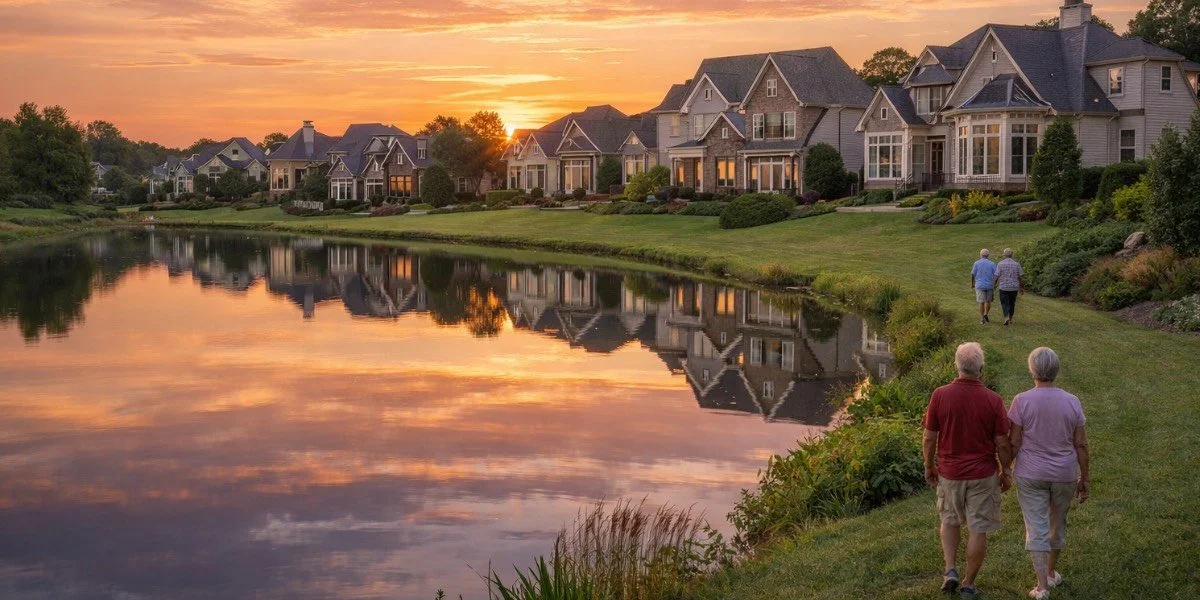
For HOAs across the Charlotte Metro, Lake Norman, Catawba Valley, and Piedmont Triad, that means the neighborhood pond sitting behind a row of attractive homes is doing more than reflecting sunsets. It is helping manage runoff, reduce erosion, protect downstream water quality, and support compliance with long-term maintenance obligations.12
The financial mistake many communities make is treating that system like a minor landscaping line item instead of the multi-thousand-dollar asset it actually is.
That is where the financial roadmap matters.
When an HOA includes pond and stormwater asset planning in a 20-year reserve mindset, it is far more likely to avoid resident complaints, deferred maintenance, and painful special assessments. When it does not, the pond usually starts speaking up in expensive ways. The shoreline erodes. The outlet clogs. Sediment builds up. Algae becomes more visible. Complaints start. Somebody asks why dues keep going up. Then the board learns, all at once, that ignoring water infrastructure was never actually the cheap option.
For associations that want a practical place to start, this is exactly the kind of conversation Clearwater Lake, Pond and Stormwater Management Services helps property owners and boards work through across the North Carolina Piedmont. A quick review through the contact page or at (704) 450-1598 can often clarify whether a community is looking at routine maintenance, a longer-term repair cycle, or a reserve planning issue that has been sitting quietly in the background.3
Why a retention pond belongs in the reserve conversation
Most boards understand reserve studies in theory. You look ahead at capital components, estimate useful life, anticipate repair or replacement costs, and build a funding plan that reduces the odds of surprise assessments later.
That logic does not stop at sidewalks and siding.
Community association guidance consistently frames reserve studies as a capital planning tool meant to reduce the likelihood of large, sudden assessments for repair and replacement needs.4 If a community owns or is responsible for a stormwater pond, outlet structure, embankment, riser, forebay, or related drainage components, those assets belong in the same long-range conversation.
That is especially true in North Carolina, where stormwater devices are not just private amenities. They often exist as part of regulatory stormwater design and long-term maintenance expectations. NC DEQ’s stormwater guidance makes clear that SCMs are permanent devices and that operation and maintenance is part of protecting function over time.12
In plain English, your community pond is not a passive body of water. It is infrastructure with a lifespan, maintenance profile, and cost curve.
Boards that plan for it usually have more options. Boards that do not often end up making reactive decisions under resident pressure.
The normal HOA problem
Here is the usual scenario.
A neighborhood has a pond that looks mostly fine from the street. The fountain may or may not be working. The turf around the bank is a little thin in places. Residents occasionally complain about algae, cattails, mosquitoes, muddy edges, or geese. The management company gets a few emails after major rain events. The board knows the pond exists, but nobody is quite sure what the long-term maintenance schedule should be, what the permit or maintenance obligations say, or how much should be reserved for future work.
So the budget gets built around the familiar categories. Landscaping. Irrigation. Pool. Insurance. General repairs.
The pond gets a line item, if it gets one at all.
That works until it does not.
Then one of three things usually happens.
First, the pond becomes visibly unattractive. Water quality declines, shoreline vegetation gets messy, or the basin starts looking neglected. Residents complain because curb appeal matters, especially in neighborhoods where homebuyers notice the common areas before they ever ask about reserve funding.
Second, the system stops functioning as well as intended. Sediment accumulation reduces storage. Outfalls clog. Erosion worsens. Maintenance that could have been handled in phases becomes more invasive and more expensive.
Third, the association discovers that documentation, inspections, or maintenance expectations were never organized in a way that helps the board plan ahead. Now the board is not just paying for work. It is paying for uncertainty.
That is the part many communities underestimate. Deferred stormwater maintenance is not only a physical problem. It is a planning problem.
Property value is tied to visible stewardship
EPA guidance on stormwater wet ponds notes that research has shown stormwater ponds can increase property values, and it also emphasizes the importance of frequent inspections and maintenance so the system continues to function and present well.5
That connection matters in HOA settings.
Residents may never use the phrase “stormwater control measure” at a board meeting, but they absolutely notice whether the neighborhood pond looks healthy or neglected. They notice whether erosion is creeping in, whether the water looks stagnant, whether the fountain is broken, and whether the shoreline feels like an asset or an eyesore.
A well-maintained pond contributes to curb appeal, reinforces the impression that the community is managed responsibly, and reduces the sense that the association is always one step behind. A neglected pond does the opposite.
This is one reason boards should stop thinking of pond maintenance as purely cosmetic. Appearance and function are tied together. A basin that is mowed, inspected, maintained, and managed proactively is usually easier to live with operationally and easier to defend financially.
That same principle extends beyond HOAs. Golf course management teams understand that visible water features shape member perception. Commercial property owners know that neglected stormwater areas can hurt appearance and invite tenant complaints. Industrial property owners know that water infrastructure problems rarely stay contained to one department for long. The common theme is simple: when water assets look neglected, people assume the rest of the operation may be neglected too.
The 20-year mindset changes the conversation
A reserve mindset does something useful for boards. It moves the discussion from “How little can we spend this year?” to “What does responsible stewardship actually require over time?”
That shift matters because pond and stormwater costs do not arrive in perfectly smooth annual increments. Some years are routine. Other years bring repairs, dredging needs, erosion correction, outlet work, replanting, structural fixes, or compliance-driven maintenance that costs materially more.
EPA maintenance guidance for stormwater practices points to life-cycle cost planning as an important part of managing these systems over time.6 NC DEQ guidance also emphasizes that operation and maintenance agreements should establish inspection frequency and long-term responsibilities for SCMs.2
That is why an HOA reserve framework should think in layers:
annual inspection and routine maintenance
recurring vegetation and shoreline management
periodic repair and restoration work
longer-cycle sediment removal or structural rehabilitation
contingency planning for higher-cost events
When communities do this well, the board is not surprised when work is needed. The board may still dislike the bill, but it is not blindsided by the existence of the bill.
That alone can save a lot of friction.
What boards should actually be asking
Many communities do not need a giant technical deep dive on day one. They need better questions.
A smart board or property manager should be asking:
What exactly does the HOA own or maintain?
Is the pond purely aesthetic, primarily a stormwater facility, or both?
What inspection and maintenance obligations apply to this asset?
What does the community know about the pond’s current condition?
Where are the likely five-year, ten-year, and twenty-year costs?
Is sediment building up faster than expected?
Are erosion issues being addressed early or ignored until they become capital repairs?
Does the reserve study or reserve framework reflect this asset realistically?
If the answer to several of those questions is “we are not sure,” that is not unusual. It is also a sign the association would benefit from a practical outside review before small uncertainties become expensive assumptions.
That is where Clearwater Lake, Pond and Stormwater Management Services can be helpful. For HOA boards, golf course operators, commercial property owners, and other communities across Charlotte, Concord, Mooresville, Statesville, Hickory, Salisbury, Winston-Salem, High Point, and Greensboro, a field-informed assessment often helps connect the visible condition of the pond to the financial planning discussion the board actually needs to have. The first step can be as simple as reaching out through the Clearwater contact page or calling (704) 450-1598 to get clarity on what kind of maintenance planning makes sense for the property.37
Resident complaints are often early warning signals
Board members sometimes treat complaints as noise. Sometimes they are. But pond-related complaints often point to real maintenance or planning issues.
Common examples include:
algae blooms or unattractive water color
overgrown banks or unmanaged vegetation
erosion near walking paths, lots, or common areas
foul odors or stagnant-looking water
sediment buildup reducing visual quality
questions about mosquitoes, wildlife, or drainage after storms
Not every complaint signals a major defect. But repeated complaints often mean the community is interacting with the consequences of deferred maintenance long before the board has labeled it that way.
The better approach is to treat those complaints as a prompt to review the asset more systematically. Is the problem cosmetic, operational, structural, or budgetary? Is it a one-season issue or part of a longer trend? Is the association funding routine stewardship appropriately, or is it effectively borrowing against the future by under-maintaining the system today?
Those are financial roadmap questions, not just maintenance questions.
The cost of waiting is usually higher than the cost of planning
The phrase “special assessment” has a special talent for getting everyone’s attention.
That is one reason reserve planning matters so much. Community association reserve guidance repeatedly emphasizes that properly funded reserves reduce the likelihood that owners will be hit with sudden, major costs for common-area repair or replacement.4
Stormwater assets fit that logic perfectly.
If a board consistently underfunds pond and SCM stewardship, the money does not disappear. It usually reappears later as a bigger and more frustrating project. Sometimes that project is still manageable. Sometimes it lands at exactly the wrong moment, after residents have already absorbed insurance increases, landscaping increases, or other infrastructure work.
That is when boards end up defending not only the cost itself, but the question residents always ask afterward: why did we not see this coming?
A realistic reserve strategy does not promise that nothing expensive will ever happen. It does put the board in a stronger position to say, with a straight face, that it acted responsibly.
This is not only an HOA issue
Even though this topic is centered on communities and reserve planning, the underlying principle applies across property types.
Golf courses deal with ponds and water features that are both operational and reputational assets. Commercial property owners manage basins and SCMs that affect appearance, drainage performance, and tenant experience. Industrial property owners often have even more direct stormwater obligations and cannot afford to treat their systems as background scenery. In every case, the pattern is the same: water infrastructure that gets ignored eventually becomes a budgeting problem.
That is part of why Clearwater’s work across multiple property types is useful in the real world. The company is not looking at a pond as isolated decoration. It is looking at the system as an asset that affects property appearance, function, maintenance planning, and long-term cost control across the North Carolina Piedmont.78
A better way to think about your community’s pond
The simplest reframing is often the most helpful.
Do not think of the pond as a background feature.
Think of it as common-area infrastructure with visibility.
That means it deserves:
documented maintenance expectations
routine inspections
realistic budgeting
periodic expert review
reserve planning tied to actual condition and likely lifecycle costs
When boards adopt that view, the discussion gets less emotional and more practical. Instead of arguing over whether the pond “really needs attention,” the board can ask what level of stewardship protects property value, reduces surprise costs, and keeps the community ahead of avoidable problems.
That is a much healthier place to operate from.
What a practical next step looks like
If your HOA has a retention pond, detention basin, or other stormwater control measure, the next move is not necessarily a giant project. It may simply be a more honest assessment of what the community owns, what condition it is in, and whether the reserve planning reflects reality.
That is the value of an HOA Budget Strategy Guide or a practical maintenance review. It gives the board a way to move from vague concern to actual planning.
For communities in Charlotte, Lake Norman, Concord, Mooresville, Statesville, Hickory, Salisbury, Winston-Salem, High Point, Greensboro, and surrounding Piedmont areas, Clearwater Lake, Pond and Stormwater Management Services can help connect the physical condition of the pond to the long-term financial roadmap the board needs to manage responsibly. A conversation through the contact page or at (704) 450-1598 is often enough to identify whether the property needs routine maintenance, a reserve planning adjustment, or a deeper repair strategy.37
Because in the end, a stormwater pond is rarely just a pond.
It is a visible asset, a functional system, and, if the board handles it correctly, one less reason to call a special meeting nobody wants to attend.
Footnotes
North Carolina Department of Environmental Quality, “SCM Operation & Maintenance,” accessed March 19, 2026, https://www.deq.nc.gov/about/divisions/energy-mineral-and-land-resources/stormwater/stormwater-program/stormwater-design-manual/scm-operation-maintenance. ↩ ↩2 ↩3
North Carolina Department of Environmental Quality, “A-7. SCM Operation & Maintenance,” February 11, 2018, accessed March 19, 2026, https://www.deq.nc.gov/energy-mineral-and-land-resources/stormwater/bmp-manual/7-operation-and-maintenance/download. ↩ ↩2 ↩3
Clearwater Lake & Pond, “Get in Contact,” accessed March 19, 2026, https://www.clearwaterlpm.com/contact. ↩ ↩2 ↩3
Community Associations Institute, “Reserve Studies,” March 13, 2023, accessed March 19, 2026, https://www.caionline.org/getmedia/cb58aee1-5c53-4e14-a836-0a65b1d17113/2023_rd207.pdf. ↩ ↩2
U.S. Environmental Protection Agency, Stormwater Wet Pond and Wetland Management Guidebook, accessed March 19, 2026, https://www.epa.gov/sites/default/files/2015-11/documents/pondmgmtguide.pdf. ↩
U.S. Environmental Protection Agency, “Maintenance of Low Impact Development,” accessed March 19, 2026, https://www.epa.gov/sites/default/files/2015-09/documents/bbfs6maintenance.pdf. ↩
Clearwater Lake & Pond, “Who We Serve,” accessed March 19, 2026, https://www.clearwaterlpm.com/who-we-serve. ↩ ↩2 ↩3
Clearwater Lake & Pond, “Stormwater Maintenance & SCM Management Services,” accessed March 19, 2026, https://www.clearwaterlpm.com/stormwater-maintenance. ↩