Why Your Summer Maintenance Tickets Spike — and How Pond Care Stops Three of Them at Once
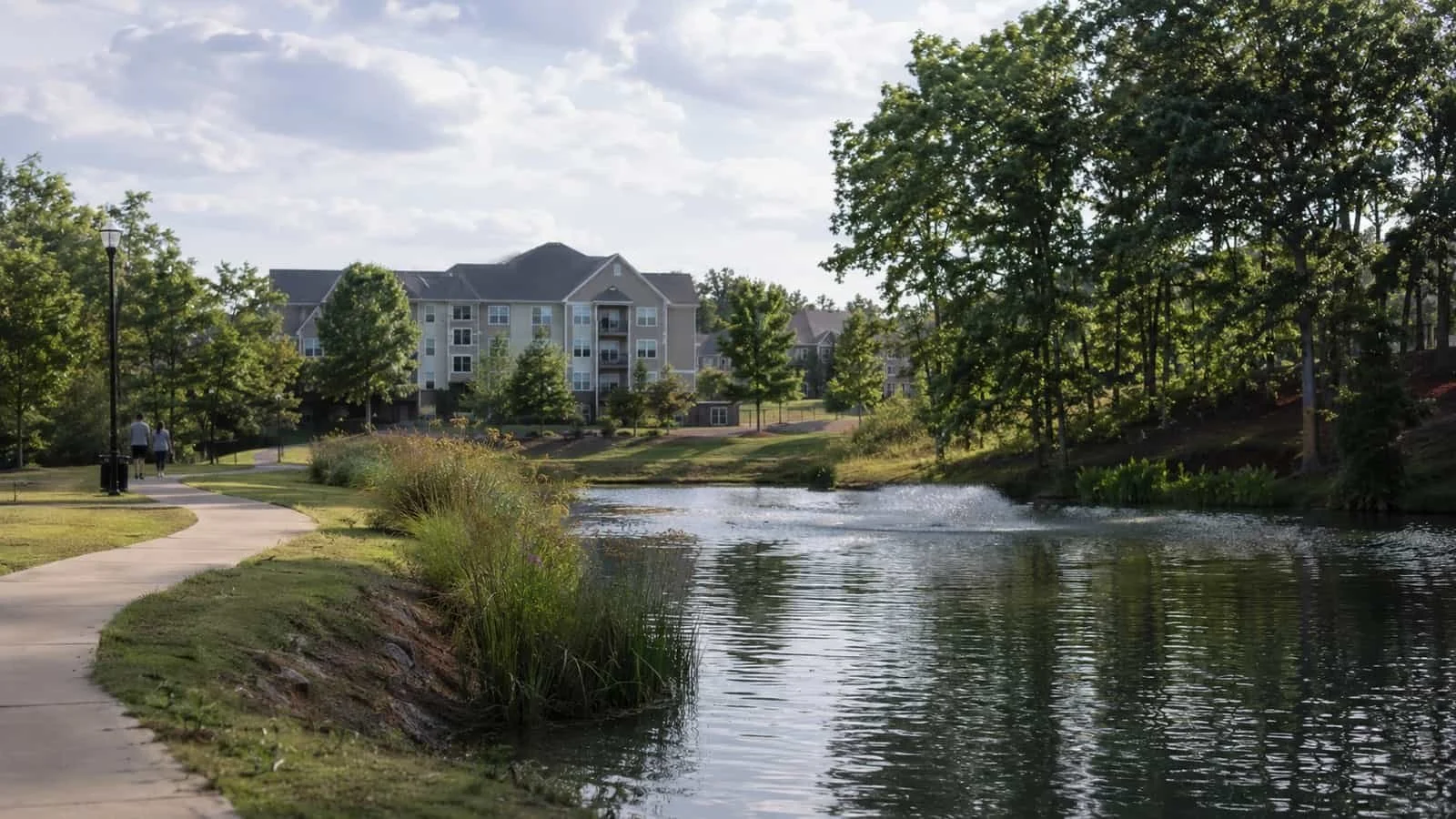
You already know which tickets are coming
Ask anyone who's run a multifamily maintenance queue through a North Carolina summer and they can recite the July tickets from memory. The mosquitoes. The smell off the pond. The slick spot on the sidewalk by the water. The puddle in the back of the lot that never drains. They spike together, every year, and most teams treat them as four unrelated work orders handled by four different people.
Here's the part that saves real money: three of those four trace back to the same place. Get the pond and the stormwater system right and you don't shave a little off each complaint category — you remove most of three of them at once.
Four tickets, one upstream cause
Resident complaint volume climbs sharply from winter to peak summer at most NC communities — by a wide multiple, not a few percent. The drivers aren't mysterious. Standing or stagnant water breeds mosquitoes. Warm, nutrient-loaded water grows algae, and algae is what residents mean when they say the pond “smells.” Algae and spray near the water's edge make the adjacent hardscape slick. And clogged or undersized drainage is why the parking lot holds water long after the rain stops. Map the tickets to causes and the overlap is obvious.
| Resident ticket | What's actually happening | Preventative fix |
|---|---|---|
| “There are mosquitoes everywhere” | Stagnant pond and standing water breeding habitat | Aeration and circulation; eliminate standing water |
| “The pond smells” | Algae plus low-oxygen muck on the bottom | Aeration and nutrient management |
| “The sidewalk by the pond is slick” | Algae and spray on hardscape near the water's edge | Shoreline buffer, edge management, cleaning cadence |
| “Water's standing in the parking lot” | Clogged inlets or blocked / undersized drainage | Inlet clearing and drainage inspection |
| “The water looks gross in our photos” | Surface algae and turbidity | Scheduled treatment plus aeration |
| “The geese and droppings are everywhere” | Open turf-to-water sightlines invite geese | Native shoreline buffer planting |
Notice the right-hand column. The same short list of fixes — aeration, circulation, nutrient management, shoreline buffers, and keeping the drainage actually draining — shows up against complaint after complaint. That's the whole case for treating this as one program instead of a stack of emergencies.
Why summer specifically
The spike isn’t random; it’s three forces landing at once. Heat pushes pond water into the 80s and 90s, which is exactly when algae and the bacteria behind odor get going — and when dissolved oxygen crashes on still nights. The rain pattern shifts to fast, hard afternoon thunderstorms that overwhelm inlets and leave behind the standing water mosquitoes need. And it’s leasing season — the months when prospects tour, residents decide whether to renew, and every green-pond photo or mosquito-bitten ankle quietly works against your occupancy. The operational problem and the revenue problem peak in the same eight weeks.
The review problem nobody invoices for
Here’s the cost that never lands on a maintenance ledger. A resident who spends July swatting mosquitoes on their own patio and walking past a pond that smells is a resident drafting a review in their head. “Beautiful community, but the pond by building 4 is disgusting in summer and the mosquitoes are unbearable” is the kind of specific, lived-in complaint future renters believe — and it surfaces right when current residents are deciding whether to renew. You can’t fully separate amenity-pond condition from reputation and retention. The water is part of the product you’re leasing.
Start with a walk of the property
Before you call anyone, an on-site team can catch most of the trouble in a ten-minute loop. Walk the pond and the drainage and check:
Is the aerator or fountain actually running? A dead aerator is behind a surprising share of summer complaints, and usually nobody notices until the pond does.
Is water standing anywhere 24 to 48 hours after rain — low spots, parking islands, the back of the lot? That’s mosquito habitat and a drainage flag.
Are the storm-drain inlets clear, or packed with mulch, trash, and grass clippings?
Is the shoreline mowed right to the water, with algae or slick film on the walkway beside it?
Does the water look turbid or smell off, especially first thing in the morning?
None of that takes a specialist to observe — only to note. It tells you which tickets are coming and gives whoever you call a running start.
The aerator does three jobs at once
If there's a single highest-leverage fix on an amenity pond, it's a working aerator. Moving, oxygenated water disrupts the still surface mosquitoes need to breed, keeps the low-oxygen conditions that cause odor from setting in, and suppresses the algae that drives both the smell and the slick walkways. One piece of equipment, quietly handling three of your top summer ticket categories. Dollar for dollar, it's one of the easier wins in multifamily operations.
It’s worth being concrete about why the still surface matters so much. The mosquitoes that plague NC communities — the ones behind the summer nuisance and the occasional West Nile headline — lay eggs on calm, standing water and need it undisturbed to develop. Ripple that surface continuously and you break the cycle at the source, no fogging truck required. The same circulation keeps oxygen mixed through the water column, which is what actually prevents the bottom-muck odor residents smell on a hot evening. You’re effectively running mosquito control and odor control off the same quiet motor.
The math most owners haven't run
Run the comparison and preventative care usually wins it going away. A reactive summer is a string of emergency service calls at emergency prices, plus the staff hours to field, dispatch, and close each ticket, plus the part that never shows up on a maintenance invoice: residents who mention the smelly pond and the mosquitoes in their renewal decision and their public reviews. A consistent preventative program is a predictable line item that keeps all of that from happening. Exact savings vary by property and pond, so treat any single dollar figure with caution — but the direction isn't really in dispute by anyone who's lived through both.
Put rough numbers to it and the gap shows up even on conservative assumptions. A single emergency pond call booked at short notice in peak season costs more than a scheduled visit — and a bad summer is several of them. Layer in the staff hours and the harder-to-quantify hit to renewals and reviews, and a modest monthly program tends to pay for itself well before Labor Day. Treat the specific figures as property-dependent, but the shape of the trade-off is consistent: planned and cheap, or reactive and expensive.
There's a compliance angle, too
Worth knowing if it's not already on your radar: many amenity ponds in North Carolina aren't just decorative — they're engineered stormwater control measures (SCMs), and they carry inspection and maintenance obligations under state stormwater rules and local MS4 programs. A neglected pond doesn't only generate resident tickets; it can generate a letter from the county or municipality. The preventative care that keeps residents happy is largely the same work that keeps you on the right side of those obligations — with documentation you can hand to an owner or an inspector. One program, two problems handled.
If your summer ticket queue is already filling up, we build preventative plans sized to multifamily communities. Request a quote or call (704) 450-1598.
What a preventative program actually looks like
It’s not complicated, and that’s the point. A right-sized plan for a community pond usually includes:
A set service cadence through the warm months — scheduled visits instead of reactive call-outs.
Aeration kept running and maintained, since it’s doing the heaviest lifting on mosquitoes, odor, and algae.
A nutrient and algae approach matched to your specific pond, not a generic dump-and-go treatment.
Shoreline and inlet attention so runoff, slick edges, and standing water stay in check.
Clear documentation each visit — the kind you can forward to ownership or a county inspector without a scramble.
Residents notice the water looking like an amenity again. You notice the July queue getting shorter.
One vendor, one program, less chaos
The reason consistent care beats reactive call-outs isn’t only price — it’s coordination. When mosquitoes, odor, slick edges, and standing water are four separate emergencies, they’re four phone calls, four schedules, and four chances for something to slip through the cracks during the busiest operational stretch of the year. Folded into one preventative program, they become a single cadence, a single point of contact, and one clean set of records. And when an owner or asset manager asks why the pond looks better and the complaint log is shorter, you have one program and one paper trail to point at — not a shoebox of emergency invoices.
Want fewer summer tickets and a pond that helps you lease instead of hurting you? Request a quote or call (704) 450-1598. We work with apartment communities and property management teams across the Charlotte Metro, Lake Norman, the Catawba Valley, and the Piedmont Triad.
-
Centers for Disease Control and Prevention. “Prevent Mosquito Bites: Standing Water.” cdc.gov.
North Carolina Department of Environmental Quality. “Stormwater Control Measure Inspection and Maintenance.” deq.nc.gov.
NC State Extension. “Wet Detention Ponds and SCM Maintenance.” content.ces.ncsu.edu.
U.S. Environmental Protection Agency. “Stormwater Management.” epa.gov.
National Multifamily Housing Council. Operations and resident-experience resources. nmhc.org.