North Carolina Got Hit Twice in 2024. Is Your Drainage Ready for 2026?
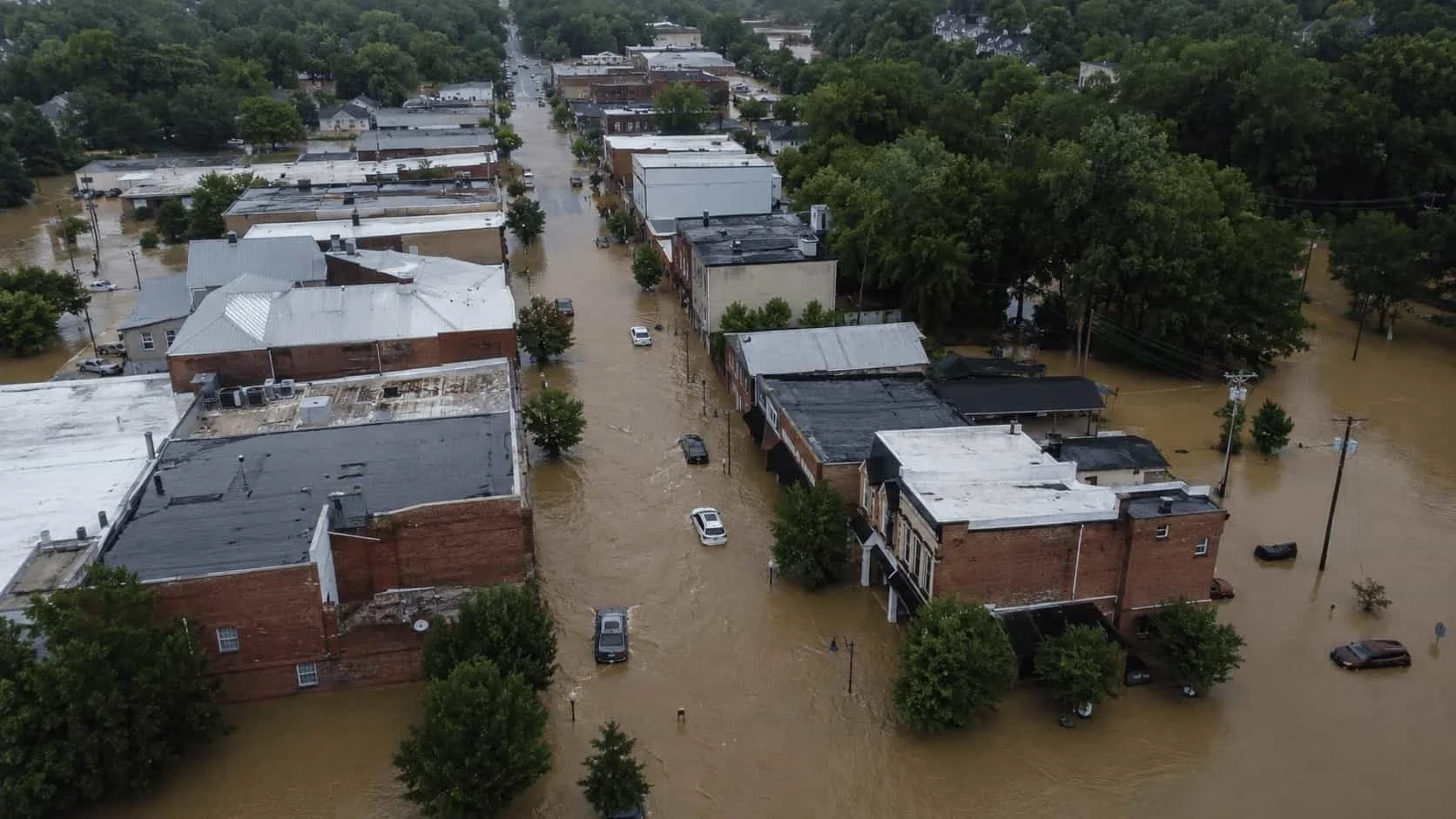
If you manage an industrial facility or commercial property in North Carolina, 2024 gave you the full presentation.
In August, Tropical Storm Debby tracked directly through the Piedmont between Charlotte and Fayetteville, dropped more than four inches of rain across the metro in a single day, flooded the Rocky River and the Haw River, spawned an EF3 tornado in Wilson County, and killed four people in North Carolina. About 100 roads closed statewide. More than 520,000 Duke Energy customers lost power across the Carolinas. River flooding in some areas persisted for two weeks after the storm passed.
Six weeks later, Hurricane Helene arrived.
Helene made landfall in Florida as a Category 4 storm on September 26, 2024, then raced north into the southern Appalachians. The remnants dumped 20 to 30 inches of rain across western North Carolina at rates of 2 to 3 inches per hour. At least 63 river gauges broke their all-time flood records. The USGS documented more than 2,000 landslides. The North Carolina Department of Health and Human Services has verified 107 storm-related deaths. The NC Office of State Budget and Management assessed total damage and needs at $59.6 billion, making Helene the costliest disaster in state history, roughly 3.5 times the impact of Hurricane Florence in 2018.
FEMA issued a Major Disaster Declaration covering 27 North Carolina counties and the Eastern Band of Cherokee Indians. Those 27 counties were not just in the mountains. They included Alexander, Burke, Caldwell, Catawba, Cleveland, Gaston, Lincoln, and Mecklenburg, counties that sit squarely in the Charlotte Metro, Lake Norman corridor, and Catawba Valley, where Clearwater Lake, Pond and Stormwater Management Services works every week.
Two storms in one season. One crossed the Piedmont at ground level. The other sent catastrophic flooding downstream through the Catawba River system. Neither required a direct hurricane landfall in the region to cause serious damage.
The 2026 hurricane season started on June 1. This guide covers what happened in 2024, why it matters for your stormwater infrastructure, and what to do about it before the next storm tests your site.
If you want a second set of eyes on your drainage before the season gets serious, call Clearwater at (704) 450-1598 or submit a request through the online form to schedule a Pre-Storm Site Readiness Audit.
What Happened in August 2024? Tropical Storm Debby Crosses the Piedmont
Debby made its first U.S. landfall as a Category 1 hurricane in Florida’s Big Bend on Monday, August 5. Then it crawled. Boxed in by high pressure and a stalled front, the storm moved as slowly as 3 mph across the Southeast, soaking everything it sat on. It made a second landfall near Charleston, South Carolina, as a tropical storm on Thursday, August 8.
Late that Thursday, Debby’s center moved directly into the North Carolina Piedmont, passing between Charlotte and Fayetteville before exiting into Virginia by Friday morning. The NC State Climate Office documented rainfall totals of 3.91 inches in Greensboro, 4.02 inches in Raleigh, and 4.24 inches in Charlotte on Thursday alone. Then a trailing cold front dropped an additional 2 to 5 inches across parts of the Piedmont, triggering additional flooding and multiple water rescues in Guilford County. In southeastern North Carolina, totals exceeded 10 inches, with 10.70 inches recorded in Wilmington.
The flooding was not a one-day event. Major flooding hit the Rocky River in Stanly and Anson counties, the Haw River in Alamance and Chatham counties, and the Lumber River in Robeson County, where the river hit a top-five all-time crest in Lumberton. In Alamance County, emergency officials went door to door urging about 30 households near the Haw River to relocate. The Governor’s office warned that the Cape Fear, Neuse, Black, Northeast Cape Fear, Lumber, Tar, and Haw rivers were all forecast to reach moderate or major flood stage.
On some rivers, flooding persisted for up to two weeks after the rain stopped. The Lumber River hit a second crest the following Monday. The Northeast Cape Fear and Black rivers in Pender and Duplin counties were still rising days later. For property owners and facility managers, that is an important detail: a detention system does not just need to handle the storm. It needs to handle the slow release afterward, sometimes for far longer than anyone expects.
Debby also spawned tornadoes across eastern North Carolina. The most destructive was an EF3 tornado in Lucama, Wilson County, which killed a man when it collapsed his home and damaged Springfield Middle School. Only two other F3/EF3 tornadoes in North Carolina history have been associated with a tropical system. An EF2 tornado struck near Harrells in Sampson County. The NWS confirmed at least five additional tornadoes across Franklin and Vance counties.
North Carolina confirmed four storm-related deaths: the tornado fatality in Lucama, a woman killed by a falling tree in Rockingham County, a motorist swept away by floodwater in Robeson County, and a motorist killed in a rain-related crash. FEMA issued Emergency Declaration EM-3608-NC on August 6, and an August 8 amendment added Cabarrus, Iredell, Mecklenburg, Rowan, Stanly, Union, and Wilkes counties as eligible for emergency protective measures. Those are Charlotte-metro and Lake Norman counties. This was not a coastal-only event.
Debby’s heavy rain also stressed dam infrastructure. The Governor’s office reported that the storm impacted dams in Cumberland and Harnett counties, and the State Emergency Response Team monitored additional dams statewide. Six weeks later, some of those same watersheds would be hit again.
What Happened in September 2024? Hurricane Helene Breaks the State
Hurricane Helene made landfall in Florida’s Big Bend as a Category 4 storm with 140 mph winds late on September 26. Its center reached the South Carolina–North Carolina border by about 8 a.m. on Friday, September 27, still carrying enormous moisture. The highest sustained winds in North Carolina were 106 mph at Mount Mitchell and 101 mph at Banner Elk. But like Debby, the destruction was overwhelmingly about water, not wind.
The National Hurricane Center reported 20 to 30 inches of rain over a large area of western North Carolina, with rates as high as 2 to 3 inches per hour. The highest total was 30.78 inches at Busick in Yancey County, with 29.98 inches in Transylvania County and 26.65 inches near Celo. The National Weather Service issued 34 separate flash flood emergencies, its highest alert level. At least 63 stream and river gauges exceeded their all-time record flood levels, and of those, 22 had records longer than 50 years and 14 had records longer than 100 years. The French Broad River and Swannanoa River in Asheville shattered crest records that had stood since 1916.
The USGS mapped more than 2,000 landslides in the southern Appalachians, primarily in western North Carolina. Roughly half affected buildings, roads, or rivers. A mudslide and the Pigeon River swept away a section of Interstate 40 at the North Carolina–Tennessee border.
The North Carolina Department of Health and Human Services has verified 107 storm-related deaths as of June 17, 2025, with 86 classified as direct and 21 as indirect in the NHC’s final report. Buncombe County alone accounted for 43 fatalities. The storm damaged or destroyed more than 125,000 housing units across western North Carolina. The NC Forest Service estimated 822,000 acres of damaged timberland. The North Carolina Department of Transportation reported that the storm damaged nearly 9,400 sites, closed 1,400 state-maintained roads, and damaged 818 state-maintained bridges. Power outages exceeded one million customers in western North Carolina.
The NC Office of State Budget and Management assessed total damage and needs at $59.6 billion: $44.4 billion in direct damage, $9.4 billion in indirect and induced losses, and $5.8 billion in recommended mitigation investment. NOAA’s National Centers for Environmental Information separately estimated $78.7 billion in total Helene damage across all affected states.
The EPA deployed response teams that removed and processed more than 1,700 orphan containers of oil, propane, and other hazardous materials from land and waterways, including retrieval operations on the French Broad River. EPA tested more than 1,500 private well samples and assessed storm damage to more than 250 drinking water and wastewater systems. A peer-reviewed study published in Toxics in 2025 found elevated PFAS in the French Broad River 15 days after the storm, with PFOA and PFOS exceeding the EPA drinking-water maximum contaminant level at one downstream site. That is what happens when floodwater reaches industrial sites and aging infrastructure at scale.
Why Should Piedmont Property Managers Care About a Mountain Catastrophe?
It is tempting to treat Helene as a mountain story that does not apply to Charlotte, Mooresville, Statesville, or Hickory. That would be a mistake.
The FEMA Major Disaster Declaration for Helene included Mecklenburg, Gaston, Lincoln, Catawba, Cleveland, Burke, Caldwell, and Alexander counties. Those are not mountain counties. Those are the counties where Clearwater maintains ponds, inspects SCMs, and clears trash racks.
The mechanism was downstream flooding. Rainfall that fell east of the Eastern Continental Divide funneled through swollen streams and secondary rivers into the Catawba River system. Duke Energy opened four of 11 floodgates at Cowans Ford Dam on Lake Norman. Lookout Shoals Lake and Mountain Island Lake each rose roughly 12 feet. Lookout Shoals crested at 9.45 feet, its highest level since 1940. Gaston County, Mecklenburg County, and the City of Belmont issued evacuation orders along the Catawba. In Catawba County, the Oxford Dam release caused major flooding and damaged several homes. Floodwaters washed away four houses below Mountain Island Lake.
Meanwhile, Lake Norman itself rose only about three feet, prompting homeowners on other Catawba basin lakes to question how reservoir operations distributed the flood load. The point for property managers is not the reservoir politics. The point is that your site does not need to be under the storm. It needs to be downstream of a saturated watershed, and in the Catawba and Yadkin–Pee Dee basins, that includes most of the Charlotte Metro, Lake Norman corridor, and Catawba Valley.
Debby reinforced the same lesson from the opposite direction. Its center actually crossed the Piedmont, dropping more than four inches on Charlotte, Greensboro, and Raleigh and flooding the Rocky and Haw rivers. Between the two storms, the Piedmont experienced both direct rainfall flooding and downstream reservoir flooding in a single season.
Why Do Back-to-Back Storms Make Drainage Failures Worse?
The NC State Climate Office has documented that over the two decades from 2005 to 2025, 50 tropical systems or their remnants affected North Carolina, averaging 2.5 storms per year. The Climate Office’s own historical synopsis warns that “rarely will a single hurricane cause major flood damage, but two in succession, or one coming after a very wet spell, can be very destructive.”
In 2024, North Carolina experienced exactly that compounding pattern. Debby saturated soils and scoured stream banks across the Piedmont in August. Helene followed six weeks later. Western North Carolina was already primed by a predecessor rain event on September 25–26, before Helene’s core even arrived.
After Debby, Robeson County’s Soil and Water Conservation department explained the cycle clearly: the drainage system was installed in the 1950s, and each flood washes out stream banks, reduces the water-holding capacity of the channels, and deposits sediment that further shrinks capacity for the next event. Then the next storm arrives and the system holds even less.
That is the same physics that governs a commercial detention pond or an industrial stormwater control measure. Every storm that deposits sediment, displaces riprap, clogs an outlet, or erodes a slope reduces the system’s capacity for the next event. Deferred maintenance does not defer risk. It compounds it.
After Helene, NCDEQ’s Division of Energy, Mineral, and Land Resources inspected more than 400 dams across mountain communities. Regional staff assessed approximately 40 damaged dams, 36 classified as high hazard, with damage ranging from minor erosion to full failure caused by overtopping. The state created a Dam Safety Grant Fund and awarded $7.3 million in a first round in February 2026. Overtopping, water flowing over an impoundment that was not designed for it, is the single most instructive failure mode for owners of on-site detention ponds. If the emergency spillway is blocked or the outlet is clogged, the water does not wait for a work order.
How Active Is the 2026 Hurricane Season Expected to Be?
NOAA’s 2026 Atlantic Hurricane Season Outlook, released on May 21, 2026, forecasts 8 to 14 named storms, 3 to 6 becoming hurricanes, and 1 to 3 reaching major hurricane intensity of Category 3 or higher. NOAA assigns a 55% probability of a below-normal season, a 35% chance of near-normal, and a 10% chance of above-normal. An ongoing El Niño pattern is expected to increase wind shear in the Atlantic basin, which typically suppresses hurricane development.
That sounds reassuring until you read the next paragraph of the same release. NOAA National Weather Service Director Ken Graham: “Although El Niño’s impact in the Atlantic basin can often suppress hurricane development, there is still uncertainty in how each season will unfold. That is why it’s essential to review your hurricane preparedness plan now. It only takes one storm to make for a very bad season.”
The NC State Climate Office data supports that warning. North Carolina averages 2.5 tropical systems per year. The Climate Office notes that El Niño years cut the rate of named storms passing within 100 miles of Wilmington roughly in half, but Helene’s deadliest inland flooding came from a system whose worst damage occurred far from the coast. A below-normal Atlantic season does not mean a below-normal North Carolina season.
The first named storm typically forms by mid to late June. By early July, the basin has usually produced at least one named system. For property managers across the Charlotte Metro, Lake Norman, Piedmont Triad, and Catawba Valley, the window to prepare drainage infrastructure is already open, and it gets narrower with every week of deferred maintenance.
What Does Pre-Storm Site Readiness Actually Mean?
Pre-storm readiness is not “hope the pond handles it.”
It means treating your stormwater system like the engineered infrastructure it is. That includes ponds, swales, pipes, inlets, catch basins, culverts, overflow structures, trash racks, outlet devices, stabilized slopes, and every drainage path that moves or stores runoff on the property. It also includes the documentation layer: site maps, permit records, Stormwater Pollution Prevention Plans (SWPPPs), spill-response procedures, and staff assignments for who does what when the weather app starts showing a track.
For industrial facilities operating under North Carolina’s NPDES general stormwater permits, including NCG060000, NCG080000, and NCG100000, the SWPPP is not a binder to point at when someone asks. The North Carolina Department of Environmental Quality (NCDEQ) requires that the SWPPP be maintained on site, implemented as written, and updated when site conditions change. Permit language ties readiness to specific best management practices (BMPs), spill prevention and response procedures, secondary containment integrity, and preventative maintenance and good housekeeping protocols.
That sounds dry, and it is. But it is also useful. The permit structure is basically telling you the same thing a good pre-storm walkthrough will tell you: before the rain gets here, know where water will go, know what can get into it, and know what is likely to fail first. If you do one well, you have done most of the other.
If you would rather get that list handled than just read about it, book your audit through Clearwater’s online request form.
What Are the Five Actions That Prevent the Biggest Pre-Storm Drainage Failures?
1. Clear the Inlets, Outlets, and Trash Racks
This is first because it is the most obvious and the most ignored.
Leaves, trash, vegetation, sticks, litter, and sediment accumulate where water is supposed to move. When heavy rain arrives at 2 to 3 inches per hour, as it did during both Debby and Helene, those minor obstructions stop being minor. FEMA guidance on water control facilities notes that debris and sediment can clog drainage structures and canals, contributing to overtopping and flood damage. For a commercial or industrial property, that can mean water backing up into parking or loading areas, bypassing designed drainage paths, overtopping basin edges, and accelerating slope erosion.
If your trash rack looks like it has been collecting inventory for a yard sale, now is the time to fix that. Not after the Weather Channel group chat wakes up.
2. Photograph Baseline Site Conditions
This is one of the cheapest things you can do, and one of the most useful after a storm.
Before the first major event, document basin water levels, outfall condition, trash rack condition, spill containment areas, drainage swales, culverts, parking areas with known ponding, slope conditions, material storage areas, and fence lines. Ready.gov recommends documenting property and keeping records to support insurance and recovery needs after a disaster.
Pre-storm photos protect two things at once. They protect your insurance position by establishing what the site looked like before the event, which is exactly the question adjusters ask after every significant claim. And they support stormwater compliance. If there is a question later about whether an outlet was clear, whether erosion existed before the storm, or whether a discharge condition changed during the event, timestamped photos are better evidence than memory and group-chat archaeology.
After Helene, property owners across 27 North Carolina counties who lacked pre-storm documentation faced harder insurance and FEMA claims processes. After Debby, the same dynamic played out along the Rocky River and Haw River. Documentation is the cheapest form of storm insurance available.
3. Verify Overflow Capacity and Emergency Flow Paths
A stormwater pond or SCM does not need to be beautiful before a storm. It needs to work.
That means checking whether the primary outlet is functioning and whether the overflow or emergency spillway path is clear, stable, and unobstructed. If runoff exceeds normal storage, where does that water go? Does it move away from buildings and critical pavement, or does it head straight for the weak spot you have been meaning to address since March?
After Helene, NCDEQ inspected more than 400 dams and found 36 high-hazard dams with damage ranging from minor erosion to full failure caused by overtopping. The state had to create a grant program and award $7.3 million just to address the most urgent repairs. The same failure mode applies at a smaller scale to every commercial detention pond with a blocked spillway. Once sediment starts moving, the cleanup cost stops being polite.
4. Walk the Site for Exposure Risks and Secondary Containment
Industrial facilities need to think beyond water flow alone.
A storm event can turn ordinary site exposure into a discharge problem. NCDEQ’s general industrial stormwater permits require stormwater pollution prevention measures including spill prevention and response procedures, secondary containment, and good housekeeping. A pre-storm walk should cover chemical and fuel storage areas, drums and totes and waste containers, secondary containment valves and condition, material piles, dumpsters, outdoor equipment with leaks, loading and unloading zones, and storm drain proximity to exposed materials.
If a tropical downpour carries contaminants off-site or into the storm system, the event is no longer just weather. It is a permit issue. The EPA’s post-Helene response illustrates the scale of what can go wrong: more than 1,700 orphan containers of oil, propane, and hazardous materials retrieved from land and waterways, elevated PFAS in the French Broad River, and more than 250 drinking water and wastewater systems requiring assessment. For facilities operating under permits such as NCG060000, NCG080000, or NCG100000, that is where the two-problems-for-the-price-of-one pain point shows up: physical damage from the storm plus a compliance problem that follows you into the next inspection cycle.
Under North Carolina General Statute 143-215.6A, NCDEQ can impose civil penalties up to $25,000 per day per violation for stormwater permit noncompliance. That is on top of whatever the storm itself cost you.
5. Confirm Who Owns the First 24 Hours
A storm-readiness plan is not complete if it lives in one person’s head.
Before the season ramps up, confirm who checks the site before a storm, who takes baseline photos, who confirms the pond and drainage paths are clear, who secures exposed materials, who responds after the storm, who logs observations for insurance or SWPPP records, and who contacts vendors if repairs are needed. Heavy rain does not wait for the person with the site map to get back from lunch.
What Are the Specific Risks for Industrial Facilities During Hurricane Season?
If you manage an industrial site, the risk is not just that water shows up where you do not want it. The risk is that stormwater picks up something it should not, bypasses a control that was not maintained, or creates a discharge issue that points straight back to your SWPPP and housekeeping program.
North Carolina’s general industrial stormwater permits are built around the idea that stormwater controls, housekeeping, spill prevention, and site documentation are part of normal operations, not emergency improvisation. The permits require a maintained SWPPP, implementation of BMPs, annual review and update, and procedures for spill prevention, secondary containment, and preventative maintenance. When you clear a trash rack, inspect a secondary containment area, or document a baseline outfall condition before a storm, you are not just being organized. You are doing the kind of preventative work that supports both site performance and permit readiness.
Clearwater Lake, Pond and Stormwater Management Services approaches pre-storm readiness as both a drainage and compliance problem. We look at what water will do during the storm, but we also look at what your site conditions allow water to carry with it, where structures may fail, and what needs to be documented before the event so you are not reconstructing the story after the fact. If you want to get ahead of that, schedule a walkthrough or call (704) 450-1598.
How Should Commercial Properties Prepare for Hurricane Season Flooding?
If you manage a commercial property, the storm usually shows up first as a tenant issue. Parking lot flooding, ponded sidewalks, blocked access lanes, landscape washout, and ceiling leaks are the visible symptoms. The less visible problem is documentation. After the storm, insurance carriers, ownership groups, and tenants all want to know the same thing: was the site ready, and can you show it?
Both Debby and Helene created exactly this problem for commercial property managers. In August, properties along the Rocky and Haw rivers dealt with flooding that persisted for days after Debby passed. In September, properties across Mecklenburg, Gaston, and Catawba counties dealt with Catawba River flooding driven by reservoir releases from upstream. In both cases, properties that lacked pre-storm documentation faced longer claims timelines, disputed pre-existing conditions, and difficulty proving that damage was storm-caused rather than maintenance-deferred.
Industry cost data gives you a sense of the exposure. Professional water mitigation for Category 3 black water, the relevant category for river flooding and sewage backup, runs roughly $7 to $7.50 per square foot. Full repair scopes including drywall and flooring replacement can reach $20 to $37 per square foot. Standard commercial property policies exclude flood; coverage requires a separate NFIP or private policy, and business-interruption losses are generally not covered by flood insurance even when the flood itself is covered. A site that drains poorly is harder to defend, harder to clean up, and harder to explain to the people who write the checks.
Clearwater helps commercial properties by checking the drainage system before the weather hits, identifying the weak spots that cause flooding and claims, and documenting baseline conditions so you have something better than “we think it looked fine last week.” If your property needs a cleaner answer before peak season, talk to our team here.
What Does Clearwater Look For During a Pre-Storm Site Readiness Audit?
A good audit is not theoretical. It is site-specific.
Clearwater Lake, Pond and Stormwater Management Services typically reviews the practical items most likely to matter during the first major storm:
Inlet and catch basin condition, including sediment depth and obstruction status
Trash racks and outlet structures, including riser pipes, weirs, and orifice plates
Basin water level relative to design storage capacity
Overflow route and emergency spillway condition, including vegetation and erosion
Swales, culverts, and drainage ditches for blockage, sedimentation, or structural damage
Visible sediment buildup in forebays, channels, and outlet areas
Shoreline or embankment erosion, including riprap displacement and slope instability
Vegetation blocking stormwater flow paths or obstructing outlet structures
Parking lot ponding areas and access road drainage patterns
Industrial exposure points, secondary containment integrity, and spill-response readiness
Photo documentation for baseline conditions with timestamps
Maintenance priorities ranked by risk before the next event
For sites in Charlotte, Concord, Mooresville, Statesville, Hickory, Salisbury, Winston-Salem, High Point, and Greensboro, this matters because Piedmont storms often arrive on top of existing site conditions that have been slowly building all spring. A little debris, a little sediment, a little vegetation, and a little deferred maintenance have a way of becoming a much larger conversation when the rain arrives all at once.
Pre-Storm Readiness Checklist You Can Use This Week
If you need the short version, start here:
Inspect and clear all inlets, catch basins, and trash racks.
Photograph current site conditions, especially drainage structures and known trouble spots.
Check stormwater pond outlets and confirm emergency overflow paths are unobstructed.
Remove or secure debris, loose materials, and exposure points near drainage routes.
Review secondary containment and spill-response readiness for all chemical and fuel storage areas.
Walk parking lots and access roads for ponding or blocked flow paths.
Note sediment buildup or erosion that could worsen during the next rain event.
Confirm who owns storm prep, storm response, and post-storm documentation assignments.
Review the SWPPP and site maps if your facility operates under an NPDES industrial stormwater permit.
Fix what you can now, and schedule help for what you cannot.
That list is not glamorous. It is also the kind of list that keeps a storm from turning into an expensive meeting.
Frequently Asked Questions About Hurricane Season Drainage Readiness in North Carolina
When does Atlantic hurricane season start and end?
Atlantic hurricane season runs from June 1 through November 30 each year. NOAA notes that the first named storm typically forms by mid to late June, with peak activity between mid-September and mid-October. NOAA’s 2026 outlook forecasts 8 to 14 named storms, with 3 to 6 becoming hurricanes. Even in a below-normal year, NOAA’s director warns that it only takes one storm.
Does North Carolina need a direct hurricane landfall to experience flooding?
No. In 2024, neither Debby nor Helene made landfall in North Carolina, and both caused significant flooding in the Piedmont. Debby tracked through the Piedmont as a tropical storm, dropping more than four inches on Charlotte. Helene made landfall in Florida, but its remnants sent catastrophic flooding downstream through the Catawba River system into Mecklenburg, Gaston, and Catawba counties. The NC State Climate Office documented 50 tropical systems or their remnants affecting the state between 2005 and 2025, averaging 2.5 per year.
What is a SWPPP, and why does it matter before a storm?
A Stormwater Pollution Prevention Plan (SWPPP) is a written document required under NPDES industrial stormwater permits in North Carolina, including NCG060000, NCG080000, and NCG100000. It identifies potential pollutant sources on the site and describes the best management practices used to prevent stormwater contamination. NCDEQ requires that the SWPPP be maintained on site, implemented, and updated as site conditions change. Before a storm, the SWPPP functions as a readiness checklist for spill prevention, secondary containment, housekeeping, and drainage system maintenance.
How much can storm damage cost a commercial or industrial property?
Costs vary by site and severity. Professional water mitigation for Category 3 (black water) flood damage runs roughly $7 to $7.50 per square foot, with full repair scopes reaching $20 to $37 per square foot. A single overtopping event at a commercial property can generate $50,000 to $200,000 in emergency cleanup, sediment removal, pavement repair, slope stabilization, and post-storm engineering review. NCDEQ can also assess civil penalties up to $25,000 per day per violation under G.S. 143-215.6A for stormwater permit noncompliance. Pre-storm readiness audits typically cost a small fraction of what a single unplanned storm-damage event produces.
Why did two storms in one season make things worse in 2024?
Debby saturated soils and scoured stream banks across the Piedmont in August. When Helene arrived six weeks later, watersheds had reduced capacity to absorb additional rainfall. The NC State Climate Office warns specifically that two storms in succession, or one arriving after a wet spell, can be far more destructive than either storm alone. For stormwater infrastructure, each storm deposits sediment, reduces pond capacity, and erodes slopes, which raises the risk for every subsequent event. That is why post-storm inspection and sediment management are part of readiness, not just pre-storm clearing.
What areas does Clearwater Lake, Pond and Stormwater Management Services cover?
Clearwater serves industrial facilities, commercial properties, HOA communities, municipalities, golf courses, and residential clients across the Charlotte Metro, Lake Norman corridor, Catawba Valley, and Piedmont Triad regions. Specific service areas include Charlotte, Huntersville, Cornelius, Mooresville, Statesville, Concord, Kannapolis, Salisbury, Hickory, Winston-Salem, Greensboro, High Point, and Kernersville, along with surrounding communities throughout the NC Piedmont.
How do I schedule a Pre-Storm Site Readiness Audit?
Call Clearwater Lake, Pond and Stormwater Management Services at (704) 450-1598 or submit a request through the online form at clearwaterlpm.com. Clearwater recommends scheduling audits before the first major rain event of the season, ideally by mid-June for facilities that have not completed a spring inspection.
2024 was not an anomaly. It was a preview.
Tropical Storm Debby crossed the Piedmont in August and flooded rivers from Stanly County to Robeson County. Hurricane Helene arrived six weeks later and broke the state. Together, they killed 111 people in North Carolina, caused $59.6 billion in damage, triggered a 27-county disaster declaration that reached into the Charlotte Metro and Catawba Valley, and demonstrated that inland flooding does not require a coastal landfall, a dramatic wind field, or even a particularly unusual hurricane season. It just requires rain, saturated ground, and infrastructure that was not ready.
The 2026 hurricane season has already started. NOAA forecasts 8 to 14 named storms even in what is expected to be a below-normal year. The NC State Climate Office data shows North Carolina averages 2.5 tropical systems per year. It only takes one.
If you manage an industrial or commercial property across the Charlotte Metro, Lake Norman, Catawba Valley, or Piedmont Triad, the most useful storm prep is usually the least flashy: clear the structures, document the baseline, check overflow capacity, walk the exposure points, and deal with the weak spots now.
Better to meet the rain with a checklist than a shrug.
Clearwater Lake, Pond and Stormwater Management Services helps industrial facilities and commercial properties across the North Carolina Piedmont get ready before the first serious storm tests the site. Book your Pre-Storm Site Readiness Audit, submit a request through the online form, or call (704) 450-1598.
-
1. NC State Climate Office. “Rapid Reaction: Debby Drenches NC in Multi-Day Rain Event.” August 12, 2024. https://climate.ncsu.edu/blog/2024/08/rapid-reaction-debby-drenches-nc-in-multi-day-rain-event/
2. NC Department of Public Safety. “Rivers Rise as NC’s Recovery From Tropical Storm Debby Continues.” August 12, 2024. https://www.ncdps.gov/news/press-releases/2024/08/12/rivers-rise-ncs-recovery-tropical-storm-debby-continues
3. NWS Wilmington. “Tropical Storm Debby: August 5–9, 2024.” https://www.weather.gov/ilm/TropicalStormDebby2024
4. Governor’s Office. “Tropical Storm Debby Continues to Bring Heavy Rain and Flooding Across NC.” August 8, 2024. https://governor.nc.gov/news/press-releases/2024/08/08/tropical-storm-debby-continues-bring-heavy-rain-and-flooding-across-nc
5. Carolina Public Press. “Debby Leaves Trail of Destruction Across North Carolina.” 2024. https://carolinapublicpress.org/64921/debby-leaves-trail-of-destruction-across-north-carolina/
6. National Hurricane Center. “Tropical Cyclone Report: Hurricane Helene (AL092024).” NOAA. Published 2025. https://www.nhc.noaa.gov/data/tcr/AL092024_Helene.pdf
7. NC Department of Health and Human Services. “Hurricane Helene Storm Related Fatalities.” Updated June 17, 2025. https://www.ncdhhs.gov/assistance/hurricane-helene-recovery-resources/hurricane-helene-storm-related-fatalities
8. NC State Climate Office. “Rapid Reaction: Historic Flooding Follows Helene in Western NC.” September 30, 2024. https://climate.ncsu.edu/blog/2024/09/rapid-reaction-historic-flooding-follows-helene-in-western-nc/
9. NC Office of State Budget and Management. Hurricane Helene Damage and Needs Assessment. 2024–2025.
10. FEMA. Major Disaster Declaration DR-4827-NC. September 28, 2024.
11. USGS. Hurricane Helene Landslide Documentation (LASER team dashboard). 2024–2025.
12. U.S. EPA. “EPA Announces Completion of Hurricane Helene Response in Western North Carolina.” March 27, 2025. https://www.epa.gov/newsreleases/epa-announces-completion-hurricane-helene-response-western-north-carolina
13. U.S. EPA. “EPA Marks One-Year Anniversary of Hurricane Helene.” 2025. https://www.epa.gov/newsreleases/epa-marks-one-year-anniversary-hurricane-helene-visit-lake-lure-north-carolina-and
14. Carolina Public Press. “Lake Flooding Engulfed Charlotte-Area Homes After Helene.” 2024. https://carolinapublicpress.org/66796/lake-floods-nc-neighborhoods-after-helene/
15. NC DEQ. “DEQ Awards $7.3 Million for Helene-Damaged Dam Repairs.” February 13, 2026. https://www.deq.nc.gov/news/press-releases/2026/02/13/deq-awards-73-million-helene-damaged-dam-repairs-opens-second-application-period
16. NC DEQ, Division of Water Resources. “Guidelines for Debris/Sediment Removal in NC Streams and Wetlands After a Natural Disaster.” Updated May 16, 2025.
17. NC State Climate Office. “Hurricanes and Tropical Cyclones.” Accessed June 2026. https://climate.ncsu.edu/learn/hurricanes-and-tropical-cyclones/
18. NC State Climate Office. “Notable Tropical Storms.” Accessed June 2026. https://products.climate.ncsu.edu/weather/hurricanes/history/
19. NOAA. “NOAA Predicts Below-Normal 2026 Atlantic Hurricane Season.” May 21, 2026. https://www.noaa.gov/news-release/noaa-predicts-below-normal-2026-atlantic-hurricane-season
20. NC DEQ. “General Industrial Permits.” Accessed June 2026. https://www.deq.nc.gov/about/divisions/energy-mineral-and-land-resources/stormwater/stormwater-program/npdes-industrial-program/general-industrial-permits
21. NC DEQ, DEMLR. “General Permit No. NCG060000.” Effective July 1, 2021.
22. FEMA. “Fact Sheet 2.0: Water Control Facilities.” https://www.fema.gov/sites/default/files/documents/fema_p-2181-fact-sheet-2-0-water-control-facilities.pdf
23. Ready.gov. “Document and Insure Your Property.” https://www.ready.gov/sites/default/files/2020-03/ready_document-and-insure-your-property.pdf
24. NC General Statute 143-215.6A. Civil Penalties for Violations of Water Quality Standards.
25. Toxics (MDPI), 2025. “Preliminary Identification of PFAS and Other Emerging Contaminants in the French Broad River, NC Post-Hurricane Helene.” https://www.mdpi.com/2305-6304/13/11/905
26. U.S. Census Bureau. “Hurricane Helene’s Impact on the Socially Vulnerable in North Carolina.” October 11, 2024. https://www.census.gov/library/stories/2024/10/hurricane-helene.html